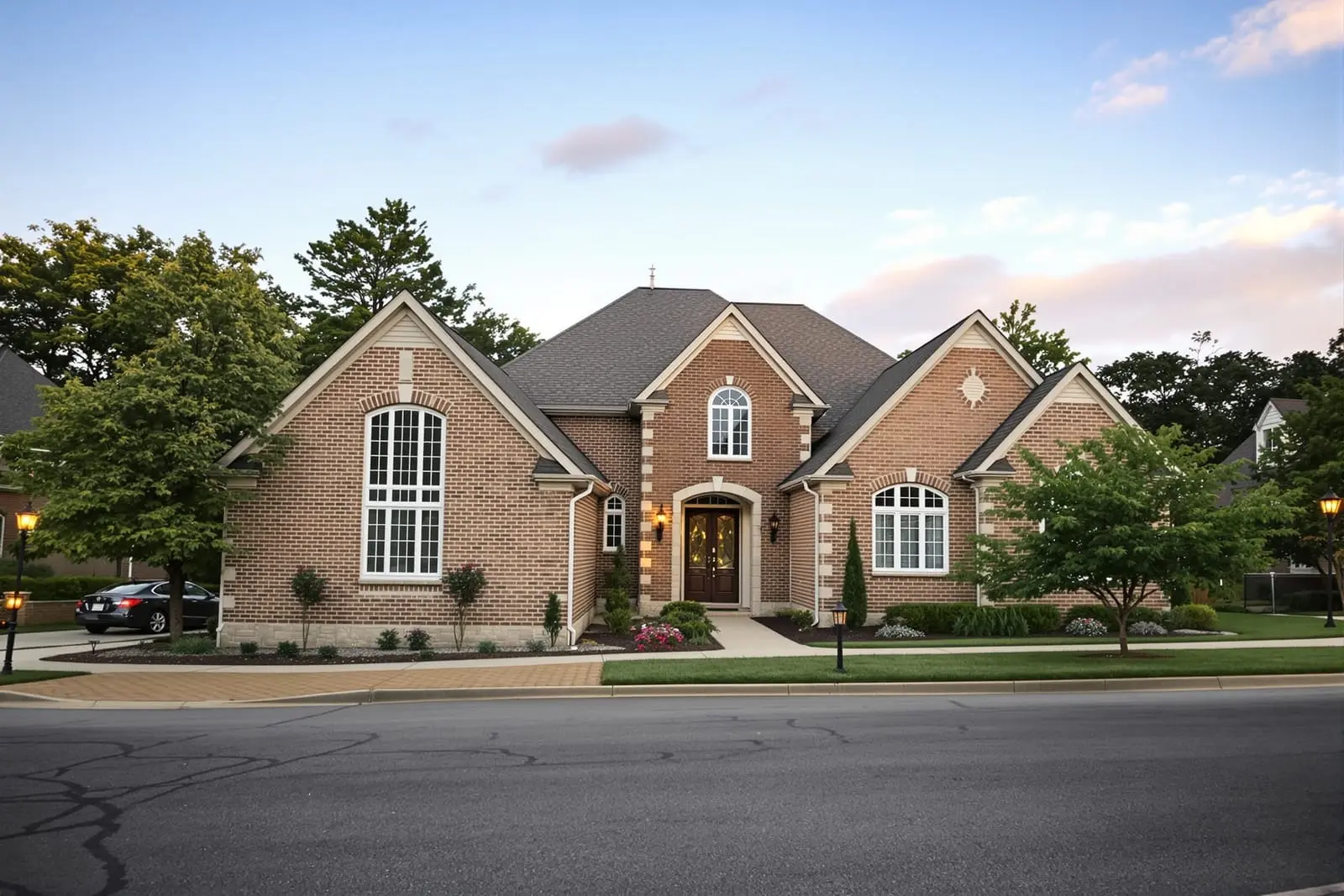
We provide brick veneer installation in Atlanta, GA that upgrades the look and value of your home. Our team installs thin brick and full brick facing on new construction and remodels. Enjoy the appearance of solid brick with efficient installation and long lasting performance.
Vanguard Masonry Atlanta provides professional brick veneer installation throughout Atlanta, GA and the surrounding area. Our licensed, insured crew delivers safe, clean, on-time work with a free estimate before anything begins. Call (404) 491-7290 or request your free quote.
Brick Veneer Installation for Atlanta Homes and Businesses
Brick veneer installation gives you the look and durability of brick without the weight and structural cost of full masonry. Vanguard Masonry Atlanta specializes in anchored and adhered brick veneer systems that are engineered for Atlanta’s humidity, clay soils, and temperature swings.
When we visit your property, we start by confirming that your framing or existing wall can support the veneer system you want. For wood framing, we check stud spacing, sheathing type, and existing weather barrier. For CMU or poured concrete, we inspect for cracks, moisture intrusion, and out-of-plumb walls that would telegraph into the finished veneer.
Our team designs each installation around your specific conditions. A brick veneer on a shaded, damp side yard in Decatur needs different drainage attention than a sunny front elevation in Buckhead. We look at roof overhangs, downspout locations, grading, and existing hardscapes so your new veneer sheds water correctly and holds its appearance for decades.
How Professional Brick Veneer Installation Actually Works
Proper brick veneer installation in Atlanta is a sequence of tightly controlled steps, not just hanging thin brick and grout.
1) Surface prep and envelope review: We remove failing siding, loose paint, and damaged sheathing. On older homes in neighborhoods like Grant Park and Kirkwood, we often find mixed substrates where additions meet the original structure. We tie these together so the veneer has a consistent, stable base.
2) Moisture management: For anchored systems, we install or upgrade weather-resistive barriers (typically a housewrap plus an additional drainage mat) and integrate flashing at windows, doors, band boards, and roof intersections. We always create weep paths at the base of the wall and over openings so trapped water can escape.
3) Support and anchoring: For full-depth veneer we build a brick ledge on the foundation or use engineered angle iron attached to the structure. Corrugated or adjustable brick ties are then installed into studs or concrete on a regular pattern and stagger, meeting code and manufacturer spacing so wind loads and veneer weight are properly transferred.
4) Layout, coursing, and movement joints: We set control lines, check story heights, and calculate course counts to avoid awkward sliver cuts under windows or at soffits. We include expansion or control joints around long runs and corners to account for Atlanta’s summer heat cycles so the veneer does not crack.
5) Brick placement and tooling: Bricks are set with consistent head and bed joints. For thin veneer, we apply a scratch coat, then a setting bed that matches the manufacturer’s specification. Joints are tooled to the profile you choose (concave, flush, raked) and brushed clean before the mortar fully cures.
6) Cleanup, sealing, and final inspection: We remove mortar smears using appropriate cleaners that will not etch the face of the brick, then we apply breathable masonry sealers where appropriate, particularly near grade and splash zones. Before sign-off, we confirm drainage paths, joint quality, and color uniformity in natural light.
Brick Veneer Options That Work in Metro Atlanta
Vanguard Masonry Atlanta helps you select brick and detailing that not only looks right for your property but also works with our hot, humid climate, red clay, and occasional freezing nights.
Thin brick veneer: This is popular for interior accent walls in Midtown condos, basement remodels in Sandy Springs, and retrofit exteriors where foundations do not have a brick ledge. It is lighter, so it can usually be added over framed walls without structural changes, and can be used for fireplaces, kitchen backsplashes, or feature walls.
Full-depth anchored veneer: This creates a traditional brick façade with a drainage cavity behind it. It is ideal for new construction or major renovations where the foundation can be detailed to support the added weight. You get better acoustic performance and a wider range of bond patterns.
Color and texture: In-town historic bungalows often look better with tumbled or reclaimed-look brick in softer reds and browns. Newer construction in areas like Alpharetta and Peachtree Corners often leans toward wirecut or modular brick in grays and whites. We bring physical samples to your site so you can see how sunlight and shade change the appearance throughout the day.
Mortar and joint profiles: Mortar color dramatically affects the final look. A buff or stone-colored mortar softens bright red brick, while a dark charcoal joint makes light brick pop. Joint tooling affects water shedding and shadow lines. Concave and V joints are best for shedding Atlanta’s heavy summer rains, while raked joints give a historic look but require stricter sealing and maintenance.
Detailing and transitions: We plan soldier courses over windows, rowlock sills, quoins at corners, and corbel bands where they make architectural sense. At transitions to siding, stucco, or stone, we use trim details and sealants that allow differential movement without cracking or water intrusion.
Costs, Estimates, and What Drives Brick Veneer Pricing
Brick veneer installation prices in Atlanta can vary widely, and we want you to understand why before you commit.
Substrate condition: If your existing sheathing is sound and relatively flat, labor and material costs stay lower. If we discover rot, termite damage, or bowed framing (common on older homes in East Atlanta and College Park), we will present repair options and transparent pricing before proceeding.
System type and brick choice: Thin veneer, especially for interiors, can be more cost-effective because it uses less material and no dedicated foundation support. Full-depth veneer requires a brick ledge or steel support, additional drainage detailing, and more labor. Premium molded or artisan brick, complex blends, or special shapes such as bullnose and corner units will add to material costs.
Height and access: First-story cladding over a slab in Smyrna is faster and less expensive than two-story veneer on a sloped lot in Vinings where scaffolding and additional safety systems are required. Limited access behind tight side yards or around established landscaping also affects labor.
Detail complexity: Arches, window returns, curved walls, and intricate patterns all take more time and skill. We itemize these in our proposals so you can decide where to invest in visual impact and where a simpler layout is sufficient.
At Vanguard Masonry Atlanta, every estimate includes a scope breakdown for demolition or prep, moisture control layers, anchoring or lath, the veneer installation itself, detailing, and cleanup, so you are not guessing what is included.
Handling Common Brick Veneer Problems Before They Cost You
Atlanta’s climate is tough on poorly installed veneer. Our crews are trained to prevent the failures we frequently see on local homes and commercial properties.
Efflorescence and staining: White powdery deposits are usually the result of trapped moisture migrating through the veneer. We design drainage cavities, weep systems, and breathable sealers to reduce water accumulation. If you already have efflorescence, we use appropriate cleaners and diagnose the moisture source, whether it is splash-back from hardscapes, leaking gutters, or ground contact.
Cracking and separation: Stair-step cracks, loose bricks, or gapping at corners often come from missing control joints, inadequate ties, or movement in the structure or soil. On new installs we design joint locations around openings and long runs. On repair or addition work, we stitch new veneer into old with compatible anchors and tie patterns instead of simply butting new work against old.
Bulging or bowing walls: Atlanta’s expansive clay soils can move foundations, which telegraphs into brick veneer. When we suspect movement, we coordinate with structural engineers to design proper supports or helical piers when needed. Our goal is to install veneer that can tolerate normal seasonal shifts without displacement.
Water intrusion at windows and doors: We see many veneers installed with no head flashing or jamb detailing, especially on fast-built subdivisions. Our approach layers flashing, housewrap, and sealants so water is directed out at each opening, not behind your interior finishes.
Why Choose Vanguard Masonry Atlanta for Brick Veneer
Brick veneer is only as reliable as the crew that installs it. Vanguard Masonry Atlanta focuses exclusively on masonry and related systems, so our experience is deep, not generic.
Local code and inspection experience: We work across the City of Atlanta, DeKalb, Cobb, Fulton, and surrounding counties. We know what each jurisdiction expects for brick ties, wall bracing, fire-rated assemblies, and energy code details. This keeps your project moving smoothly through permitting and inspection.
Integrated moisture and structural thinking: We look at your veneer as part of a wall system, not decoration. Our teams are trained to understand vapor drive, dew points, and drainage planes, which is critical in Atlanta’s mixed-humid climate. This reduces the risk of trapped moisture, mold in wall cavities, and hidden rot.
Skilled bricklayers and consistent supervision: Lead masons set the layout, bond pattern, and quality standards on every job. You get the same supervisors returning day after day, not constantly changing subcontract crews. This consistency shows up in even joints, aligned corners, tidy cuts, and clean job sites.
Communication and documentation: Before we start, you will have a written scope, material list, and timeline. During the project we provide progress updates and photos, especially useful for investors or owners who are not on-site daily. At completion, you receive care instructions for your specific brick and mortar combination.
What to Expect When You Schedule Brick Veneer Installation
From the first phone call with Vanguard Masonry Atlanta through final cleanup, we follow a structured process so you know what is happening on your property.
Initial consultation: We visit your home or building, measure, photograph existing conditions, and discuss how you plan to use the space. Exterior accent walls, full façade conversions, interior feature walls, or mixed-material fronts all have different requirements, and we explain those differences in plain language.
Design and proposal: We help you choose between thin and full-depth veneer, brick types, colors, and patterns. If you have an HOA or historic district review, we provide sample boards and spec sheets you can submit. Our written proposal breaks down scope, schedule, and payment milestones.
Pre-construction planning: We coordinate any required permits, dumpster placement, and material staging so your driveway and access are managed. For busy in-town streets, we plan deliveries to avoid school traffic and peak congestion whenever possible.
Installation phase: Work areas are protected with tarps and plastic sheeting. We manage dust and debris, especially for interior veneer projects. You will see daily progress as courses go up. If site conditions or hidden issues require a change, we document it and review options before moving forward.
Walkthrough and aftercare: At completion we walk the project with you in natural light, mark any touch-up areas, and address them before final sign-off. We provide guidance on cleaning methods, when to reseal if appropriate, and what minor hairline cracking is normal versus what should be monitored and reported.
You end up with a brick veneer installation that fits Atlanta’s climate, meets local code, and delivers the look you wanted without surprises.
“
Professional brick veneer installation, done right the first time, quality materials, honest pricing, and results that last.