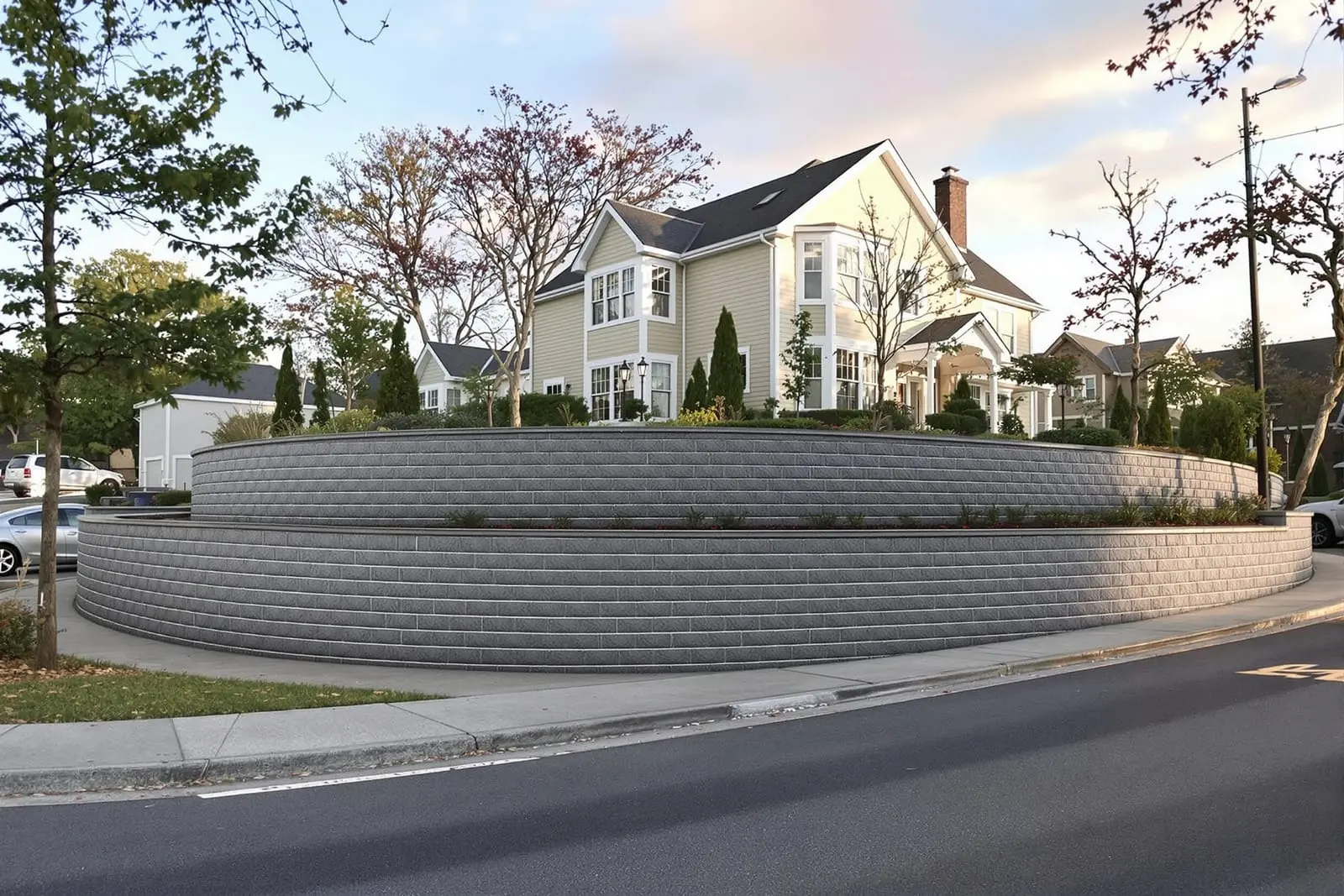
We construct commercial retaining walls in Atlanta, GA for site development, parking lots, and property boundaries. Our team builds engineered masonry and block walls with proper drainage, geogrid reinforcement, and durable finishes. We coordinate with site contractors to keep projects on schedule and in spec.
Vanguard Masonry Atlanta provides professional commercial retaining walls throughout Atlanta, GA and the surrounding area. Our licensed, insured crew delivers safe, clean, on-time work with a free estimate before anything begins. Call (404) 491-7290 or request your free quote.
Engineered Commercial Retaining Walls for Atlanta Properties
Vanguard Masonry Atlanta designs and builds commercial retaining walls that solve real grading and drainage problems on Atlanta job sites. We work on office parks, multi-family developments, retail centers, schools, and industrial facilities across the metro area.
A commercial retaining wall is not just a line of blocks. It is a structural system that has to resist soil pressure, handle Atlanta’s heavy summer storms, and meet local code. Our process starts with a site visit where we walk the property, look at existing grades, check how water currently moves across the site, and identify nearby structures, utilities, and tree roots that might affect the design.
From there, we coordinate with your civil engineer or provide an engineering partner if you do not already have one. For walls above 4 feet, or that carry a surcharge (such as drive lanes, parking, or building loads close to the top of the wall), stamped engineering is required in most Atlanta jurisdictions. We help assemble the drawings, cross sections, and material specs needed for permits so your project does not stall at the city or county level.
Materials, Systems, and Design Choices That Affect Performance and Cost
There are several ways to build commercial retaining walls in Atlanta, and each has trade-offs in appearance, lifespan, speed of installation, and cost.
Segmental retaining walls (SRW) use interlocking concrete blocks with geogrid reinforcement. These are common along shopping center parking lots, apartment complexes, and along new roads. They install relatively quickly, can curve and step with the terrain, and offer multiple face textures and colors to match your project. Vanguard Masonry Atlanta sources blocks from regional manufacturers so we can match existing walls or HOA requirements when needed.
Cast-in-place concrete walls are a good choice when space is tight, the wall is very tall, or there are heavy loads close to the top. These walls require forming, rebar installation, and concrete placement in strict sequence. They cost more upfront but can be finished with architectural treatments like form liners, reveals, or veneer stone.
For service yards, loading docks, and industrial sites, we also build reinforced CMU (concrete masonry unit) retaining walls when they fit the engineer’s design. These combine block laying with internal rebar and grouted cells. They can be faced later with stucco or thin brick for a more finished look.
What drives the cost of a commercial retaining wall in Atlanta is not just height. Access for equipment, depth of required excavation, type and thickness of geogrid, drainage design, need for guardrails or fences, and any architectural finishes all matter. During estimating, we spell out these items in plain language so owners and GCs know exactly where the money is going.
How We Build Commercial Retaining Walls Step by Step
On a typical commercial retaining wall project, Vanguard Masonry Atlanta follows a clear sequence so the wall performs as designed and passes inspection the first time.
1. Layout and excavation. We verify control points and wall alignment with your survey data, then excavate to the required depth for the footing or base. In the red clay soils common across Atlanta, we often have to over-excavate soft spots and replace them with compacted aggregate to avoid settlement.
2. Base preparation. We install and compact a crushed stone base to a specific thickness and density. This is critical. A poorly compacted base is one of the main reasons walls settle or lean over time.
3. Block or form installation. For SRW walls, we set the first course of blocks precisely, check level in both directions, and backfill and compact behind each lift. For cast-in-place or CMU walls, we set forms or lay block according to the engineer’s drawings, tying rebar as specified.
4. Drainage installation. Behind the wall we place a clean stone drainage zone and perforated pipe, then wrap it as needed with fabric to keep fine soil from clogging the system. Proper drainage matters in Atlanta because sudden downpours can build hydrostatic pressure quickly. We also tie into surface drains or storm structures when the site design requires it.
5. Reinforcement and backfill. On geogrid reinforced walls, we place geogrid at designed elevations, extend it back into the soil, and compact backfill in thin lifts. We never skip grid layers or stretch grid lengths to save time because that is where long term failures come from.
6. Finish work. We complete cap units, joint tooling, or surface finishes, then coordinate with other trades for fencing, railings, or adjacent paving. Before we leave, we walk the wall with the superintendent or owner’s rep to review workmanship and discuss any maintenance points.
Local Conditions, Permits, and Common Problems in Atlanta
Building commercial retaining walls in Atlanta requires attention to local rules and ground conditions. Different jurisdictions such as the City of Atlanta, DeKalb, Cobb, Fulton, and Gwinnett counties can have slightly different submittal and inspection requirements. We are familiar with these differences and adjust our documentation and timing to match.
Because of our region’s mix of red clay, fill dirt, and occasional rock, soil conditions can change within a single site. During excavation, if we encounter unsuitable fill, buried debris, or groundwater, we notify the GC or owner immediately and propose a remedy that aligns with the engineer’s direction. This might mean thicker base stone, underdrains, or revising the wall alignment slightly.
Common problems we see on commercial retaining walls in Atlanta include water staining and efflorescence from poor drainage, bulging from inadequate compaction, and cracked caps from vehicles or equipment driving too close to the top of the wall. When we design and build, we look ahead at how the area will actually be used, not just what is on the plan sheet. If trucks are likely to get near the wall, we may recommend a barrier curb or guardrail and coordinate that with your design team.
Atlanta’s weather also matters for scheduling. Winter is usually fine for wall construction, but long cold, wet stretches can slow compaction and finishing. Late winter through early summer is often the best time to plan large walls so that main structure and paving can follow without delay. We work with your project schedule to phase wall work around other site activities and concrete placements.
Planning Your Project and Working With Vanguard Masonry Atlanta
For owners, property managers, and general contractors, the most useful time to bring Vanguard Masonry Atlanta into a commercial retaining wall project is during early site planning or value engineering. We can often suggest block systems, layout changes, or step configurations that reduce wall height, shorten geogrid lengths, or improve drainage access. Small adjustments on paper can shave days off the schedule and real dollars off the budget.
If you already have engineering drawings, we will review them for constructability on your specific Atlanta site. We look at access for equipment, staging zones for block and aggregate, tie-ins to existing walls or buildings, and how stormwater is being routed. If something looks like a problem in the field, we flag it before mobilization rather than waiting for a failure inspection.
On active commercial sites and occupied properties, we pay attention to safety and disruption. We fence off excavation zones, coordinate deliveries to avoid peak traffic hours, and keep clean, organized work areas to minimize impact on tenants, customers, and neighbors.
Before we finalize a proposal, we walk you through the scope: wall length and height, material choices, reinforcement type, drainage design, and site restoration. That way, you can compare options clearly and understand long term maintenance implications. Our goal is a commercial retaining wall that looks appropriate for your property, handles Atlanta weather without constant repair calls, and complies with local codes and engineering standards.
“
Professional commercial retaining walls, done right the first time, quality materials, honest pricing, and results that last.
Vanguard Masonry Atlanta
Commercial Retaining Walls Across Our Service Area